This is the third of three posts describing my experience as Historian/Storyteller on Liberation Tour’s 8-day Holland Liberation 80th Anniversary Canadian Battlefield and Remembrance Tour. Part three covers the three days prior to our 8-day tour, which Marathon of History’s Mat Johnson and I spent aboard Coach Rembrandt.
Day Z-4 – Canada to Amiens, France
Mat and I rendezvoused at the Charles de Gualle Airport in France and travelled by train to Amiens where we met up with Liberation Tours John Cannon and Phil Craig. Their group were five days in to their 17-day Northwest Europe tour, having visited the D-day beaches and the route the Canadians followed as they fought their way through the Battle of Normandy. Today they’d arrived after visiting the channel port of Dieppe.
For the next three days the tour would focus on the First World War, and the significant role the Canadian Corps and the Royal Newfoundland Regiment would play in the war to end all wars.
Day Z-4 – The Somme
My long journey to France and the 9-hour time difference made for a groggy start to the morning but a double-espresso and Amiens’ crisp morning air provided the jolt I needed.
Today we would explore the Somme, where in 1916 a British offensive was devised to aid the French defending Verdun. The five-month campaign began disastrously, with the loss of 57,000 men on July 1, 1916, including nearly three-quarters of the Royal Newfoundland Regiment. It was the worst day in the history of the British Army.
The Canadians began arriving in late August and would see action here until November 18, when General Sir Douglas Haig finally called an end to the offensive. While the Allies had made small advances, and helped to relieve pressure on the French, there had been no breakthrough. The butcher’s bill was eye-watering … British Empire casualties numbered 420,000, including 24,000 Canadians.
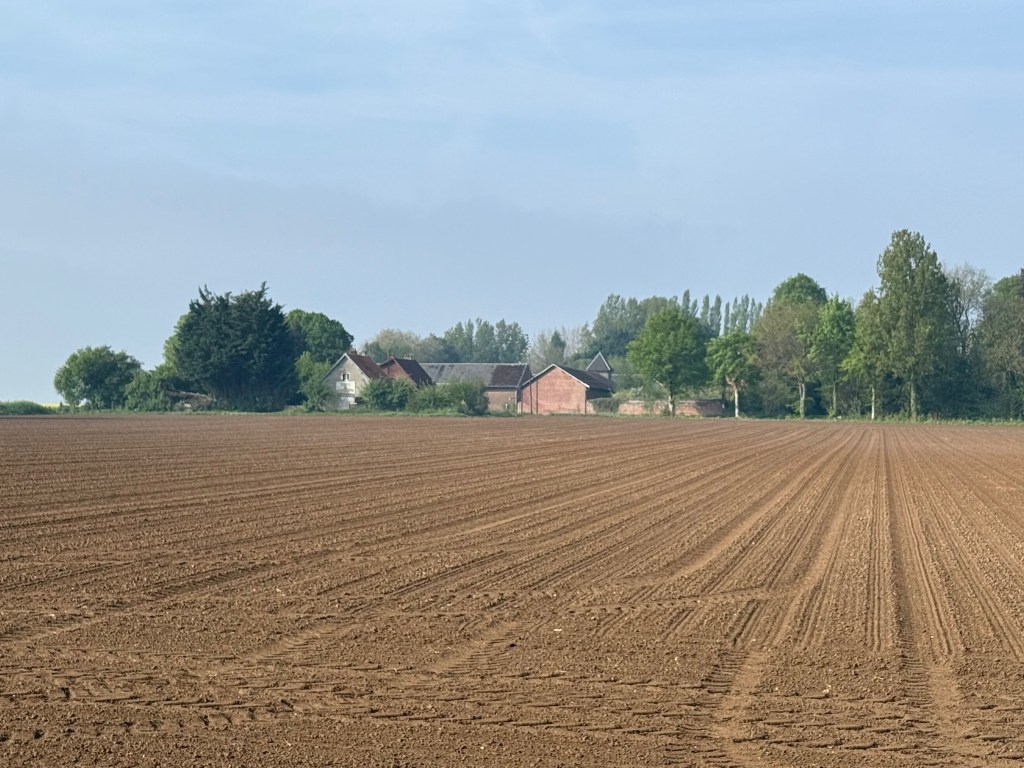
The landscape that had been the scene of so much blood-letting was today bathed in sunshine. Morning mist clung to the rolling green fields and ripening canola crops that dominated the region. Bucolic as it appeared, reminders of its brutal past were everywhere. As we drove north of Albert we could clearly see the tower of Basilica of Notre-Dame de Brebieres, upon which stood the statue of Virgin Mary and Child. In 1915 a German shell knocked the statue over, and for three years it clung precariously to the tower, until dislodged by British artillery in March 1918.
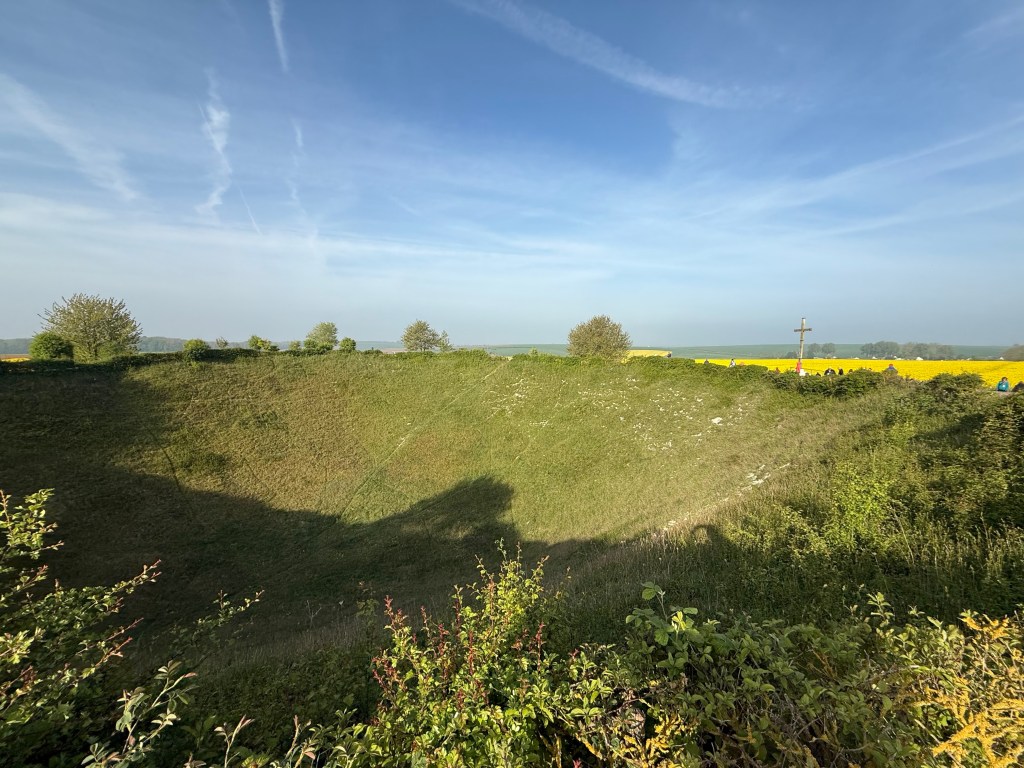
Our first stop was Lochnagar Crater, near the village of La Boisselle. Some reminders are more tangible than others, and at 100m wide by 21m deep, Lochnagar Crater is one of those. It was carved out of the Somme landscape at 7:28am on July 1, 1916, when 27 tons of ammonal was detonated below the German front lines. It was one of 19 mines dug and packed with explosives by Royal Engineers prior to the start of the Somme offensive. On the ridge of the crater Phil Craig delivered a brief recounting the first day of the Somme.
After a short drive we stopped at a memorial to the Canadian Corps just outside the village of Courcelette. We gathered in a shady corner of the grounds, directly opposite the fields over which the Canadians fought, to hear Phil’s brief on the Canadian Corps first appearance on the Somme.
The Canadian Corps arrived on September 3 to relieve the Australians at Mouquet Farm, and then at Courcelette on September 15. It was here, on that day, that tanks were deployed on the battlefield for the first time. The Canadians drove the Germans out of their strong hold at the Sugar Beet Factory, just across the field from where we stood. Recovering quickly from the initial shock of encountering the lumbering but terrifying steel “landships”, the Germans responded with a withering artillery barrage. The village was taken later that day however relentless German counterattacks against the front that stretched from Courcelette to Mouquet Farm prolonged the battle until September 22.
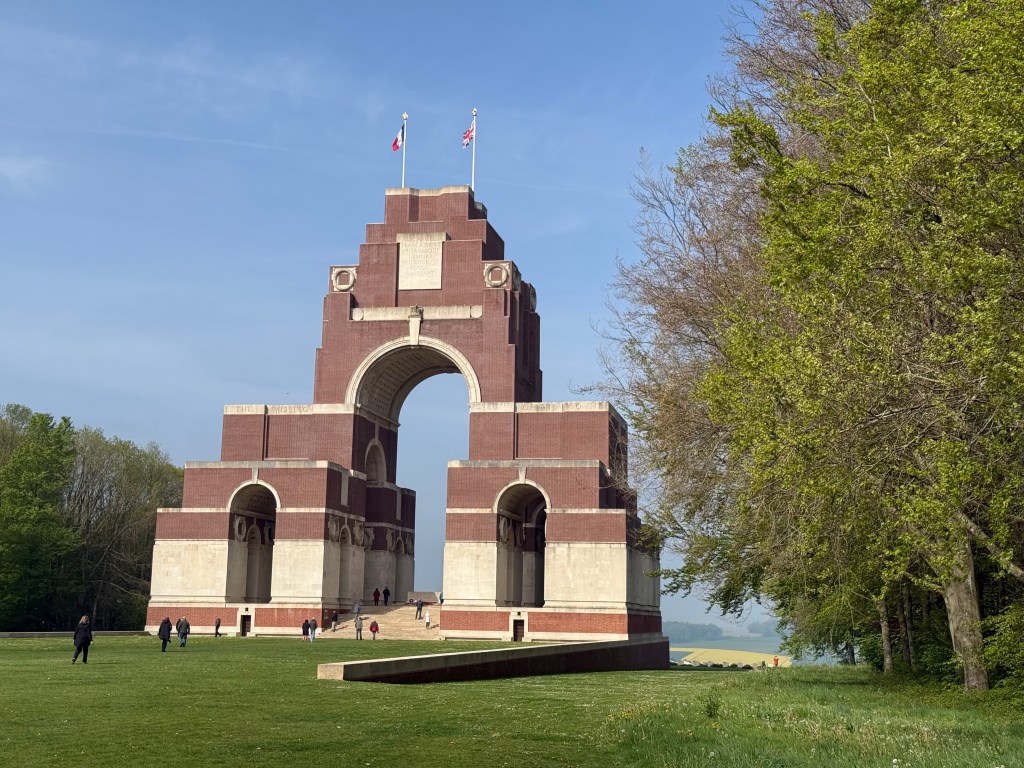
Just down the road was the Thiepval Memorial of the Somme. The memorial, designed by Sir Edwin Lutyens, commemorates 72,337 missing British and South African soldiers who have no known grave. The imposing monument overlooks a small cemetery for Commonwealth and French soldiers who died in the Somme offensive.
A few minutes’ drive away was our lunch stop in the village of Authuille where we enjoyed a delicious 3-course meal, before setting out on the road again. And the best was yet to come, because the highlight of my day was our visit to Beaumont-Hamel.
This was my first visit to the Beaumont-Hamel Newfoundland Memorial, and it has been on my must-see list for many years. More so after my visit to St. John’s in 2016, when I visited the brand-new Royal Newfoundland Regiment Gallery at The Rooms.
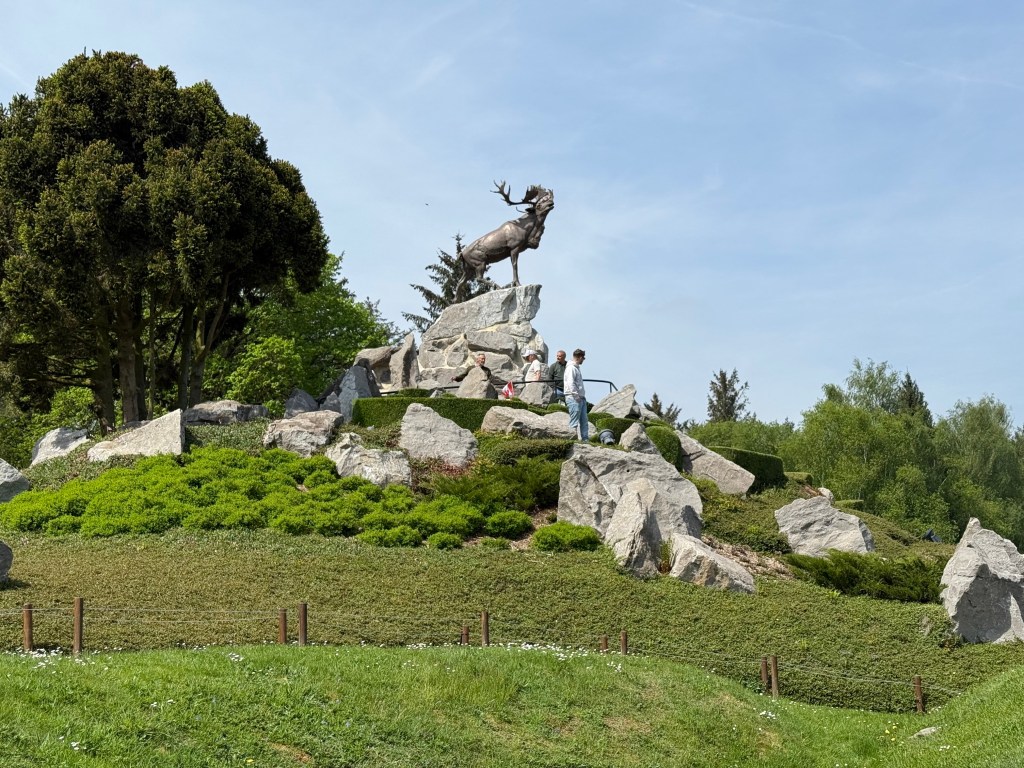
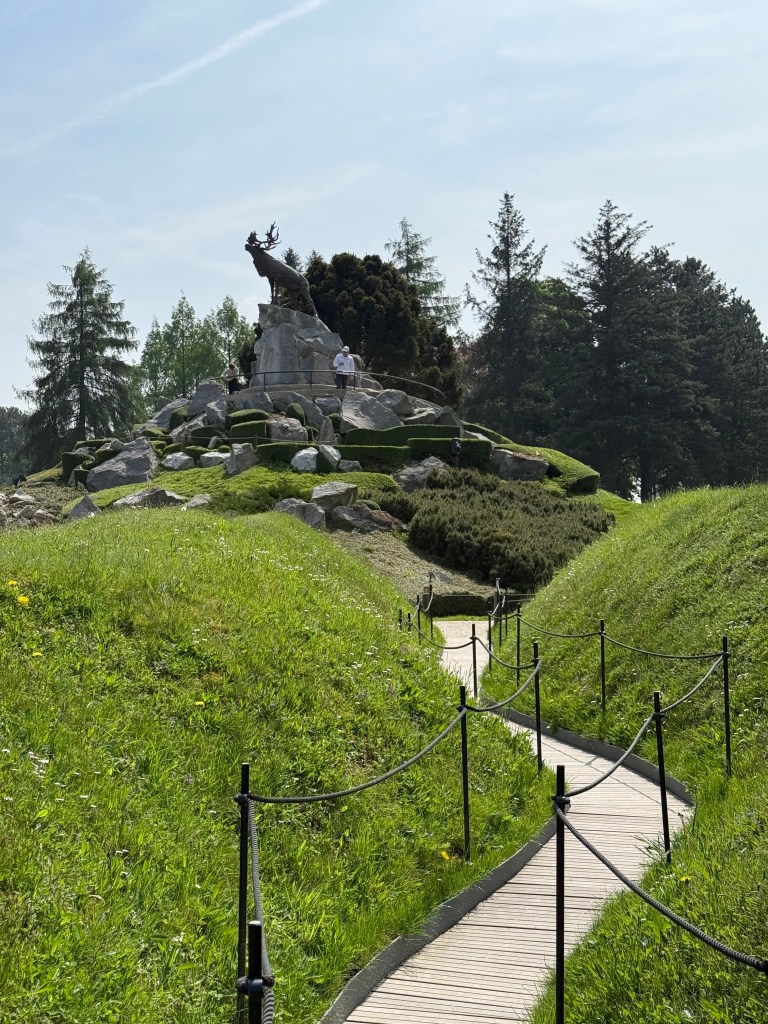
The centrepiece of the memorial is a giant bronze caribou which stands atop a rocky outcrop, facing in the direction of the attack made by the Royal Newfoundland Regiment on July 1, 1916. At its base are three bronze panels inscribed with the names of the 821 Newfoundlanders that died in the First World War and for whom there is no known grave.
We lined up along the pathway that stretched beneath the monument, overlooking the battlefield, while Phil described the battle that sent the Blue Puttees over the top on the first day of the Battle of the Somme. The Newfoundlanders lost 700 men, killed, wounded or missing … only 68 men took part in roll call the next day.
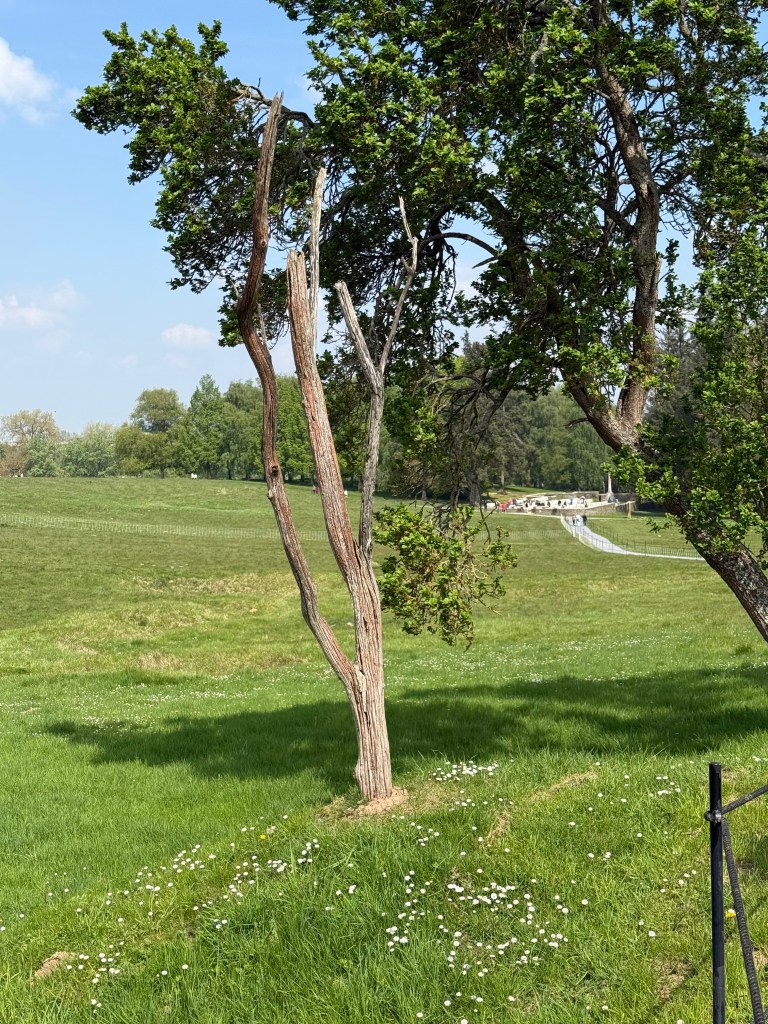
After the briefing we were given plenty of time to walk along the pathways that weaved their way through the park-like setting. One passed a replica of the Danger Tree, a landmark that sits in the middle of no man’s land, marking the spot where many Newfoundlanders lost their lives. Another replica of the Danger Tree is exhibited at the Royal Newfoundland Regiment Gallery at The Rooms in St. John’s. The memorial site also contains four CWGC cemeteries, including Y Ravine Cemetery, which many of us visited.
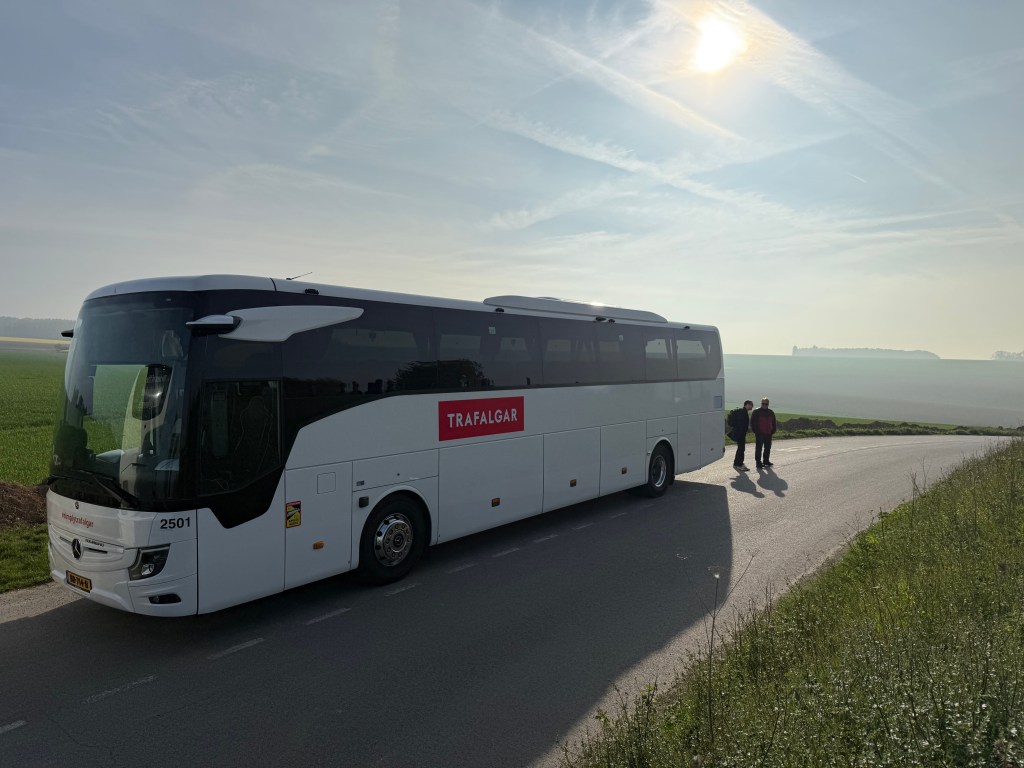
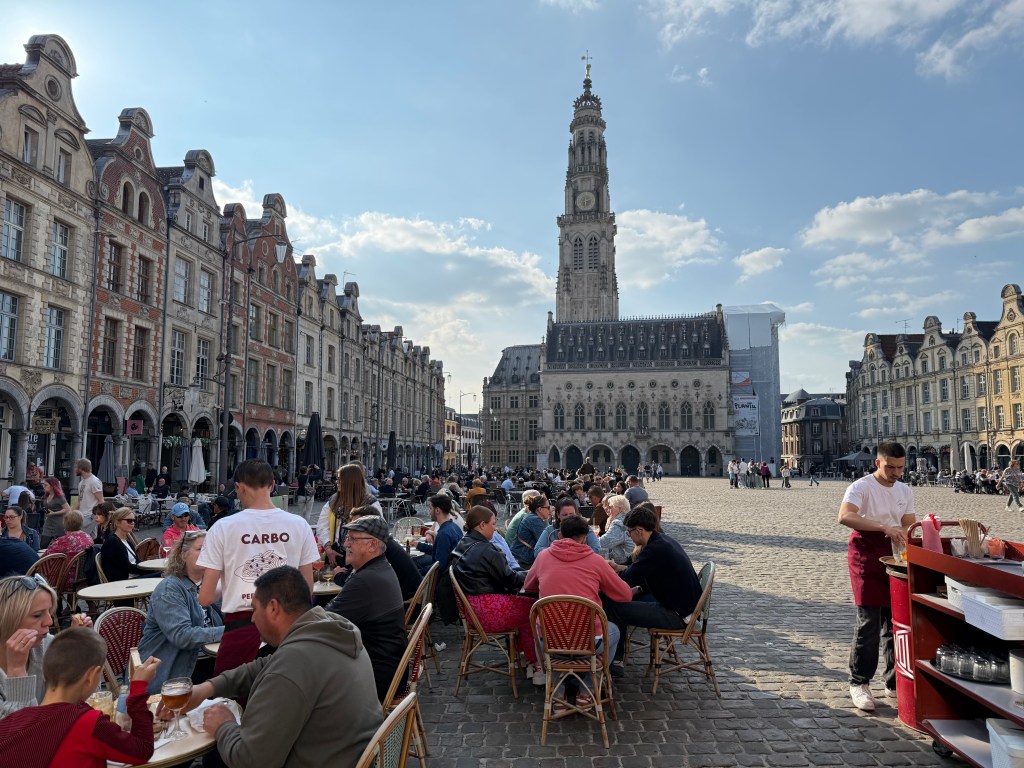
In late afternoon we boarded our coach and made the 40-minute journey to Arras where we would spend the night. Our hotel was a short walk away from Place des Héros, a beautiful square in the centre of the city, named after the resistance fighters who were shot during the Second World War. The square is surrounded by bars and restaurants, and it was here that many of us spent the evening.

Day Z-2 – Canadian National Vimy Memorial
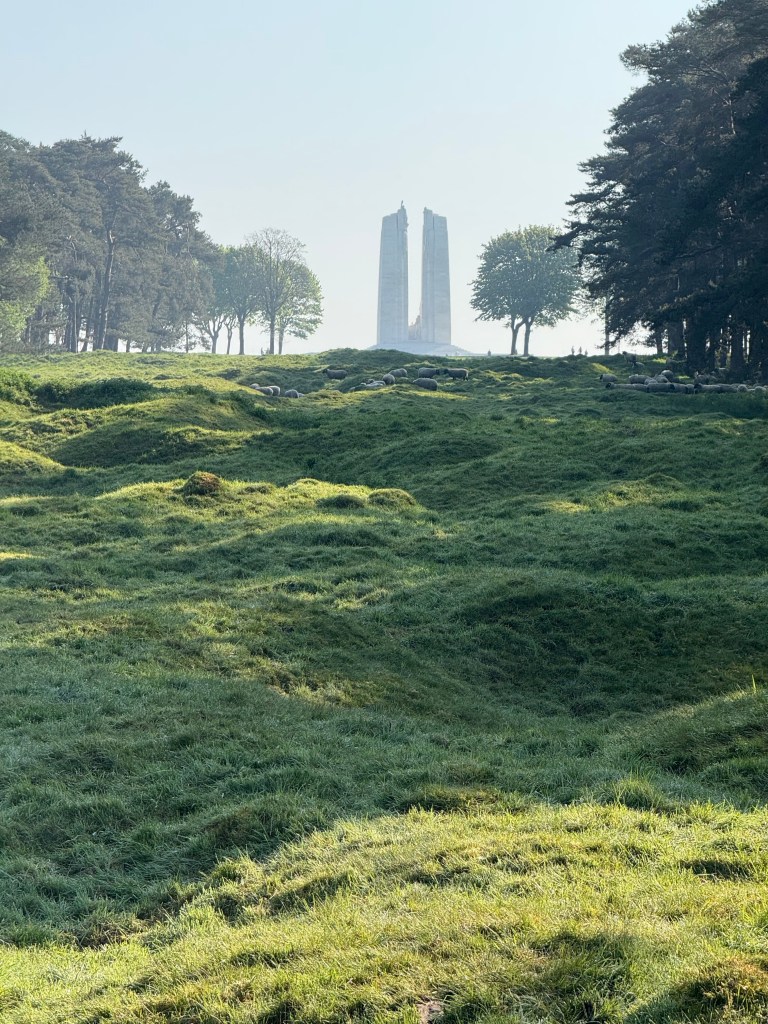
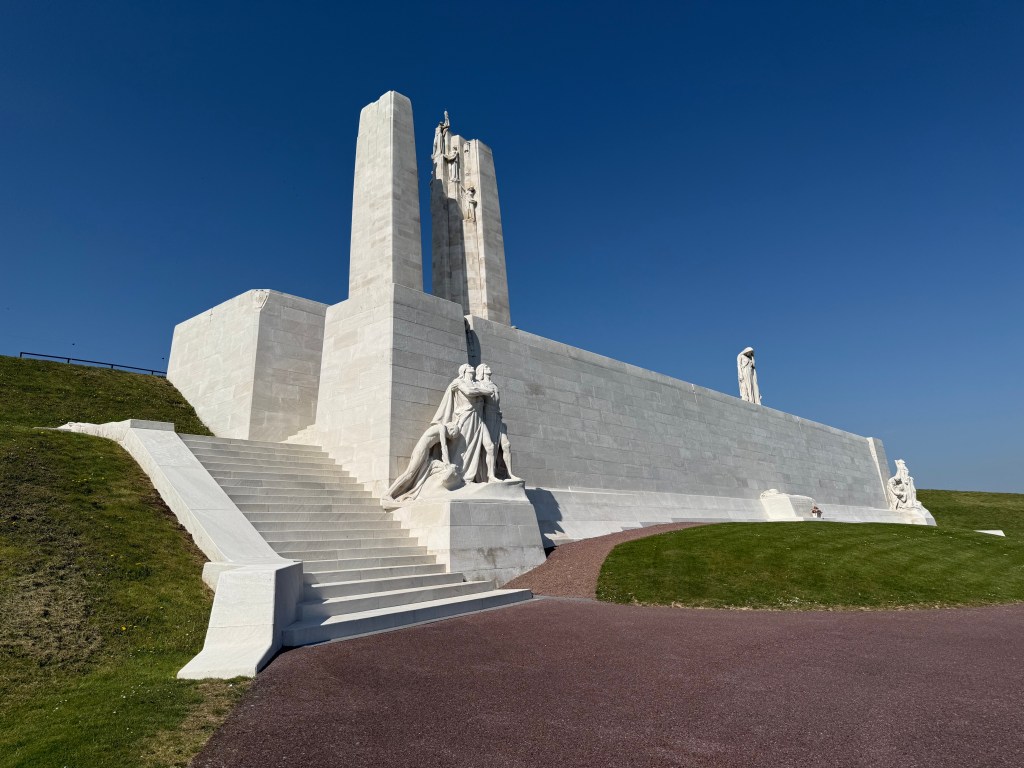
After a filling breakfast at our hotel we boarded coach Rembrandt under sunny blue skies, for what many would consider the highlight of any First World War battlefield itinerary, the Canadian National Vimy Memorial. We had the entire morning to explore this National Historic Site, one of only two that exist outside of Canada, the other being the Beaumont-Hamel Newfoundland Memorial we visited yesterday.
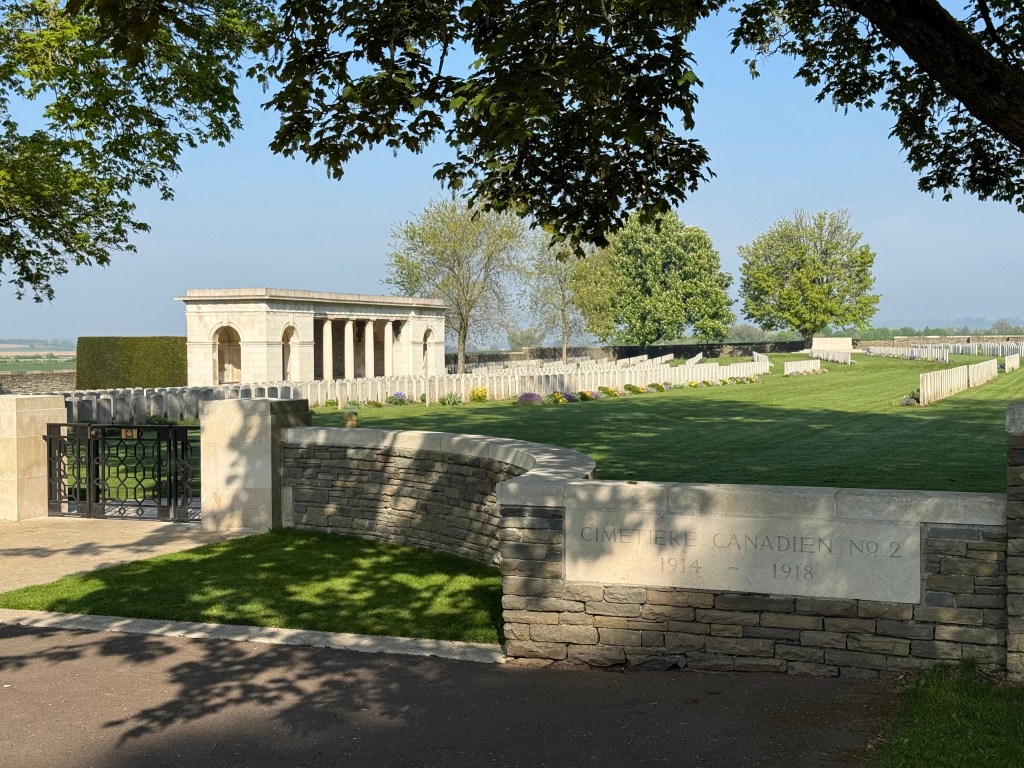
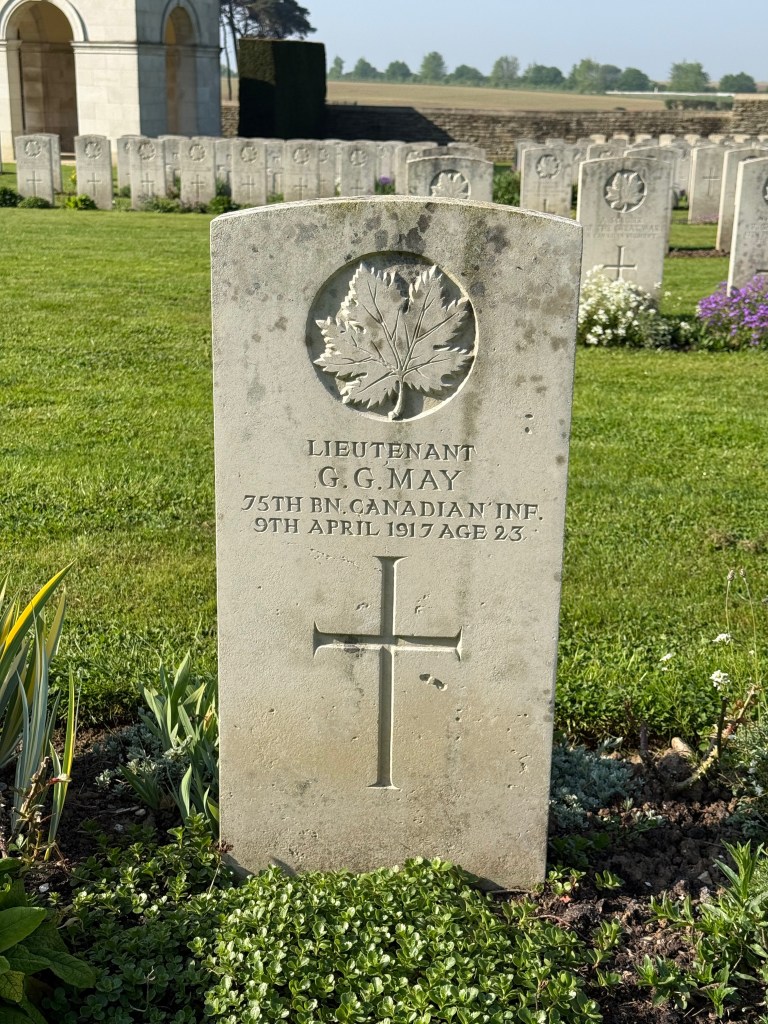
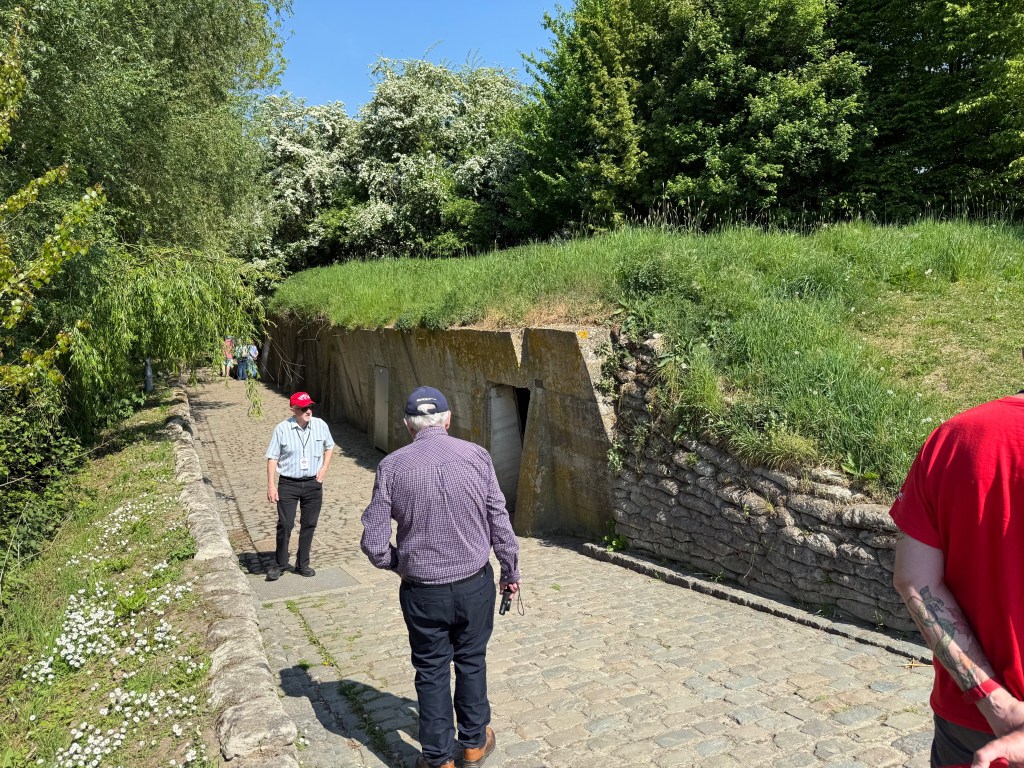
I’ve visited and written about Vimy previously and so I will let the photographs and a video speak for itself. Suffice it to say it was as magnificent as ever. Everyone had an opportunity to visit the memorial, the Visitor’s Centre and to participate in guided walks of the trenches and the Grange Subway. Mat and I also took a moment to walk to Canadian Cemetery No. 2, Neuville-St.-Vaast and pay respects to my cousin Lt. George Geoffrey May who died during the assault on Vimy Ridge.
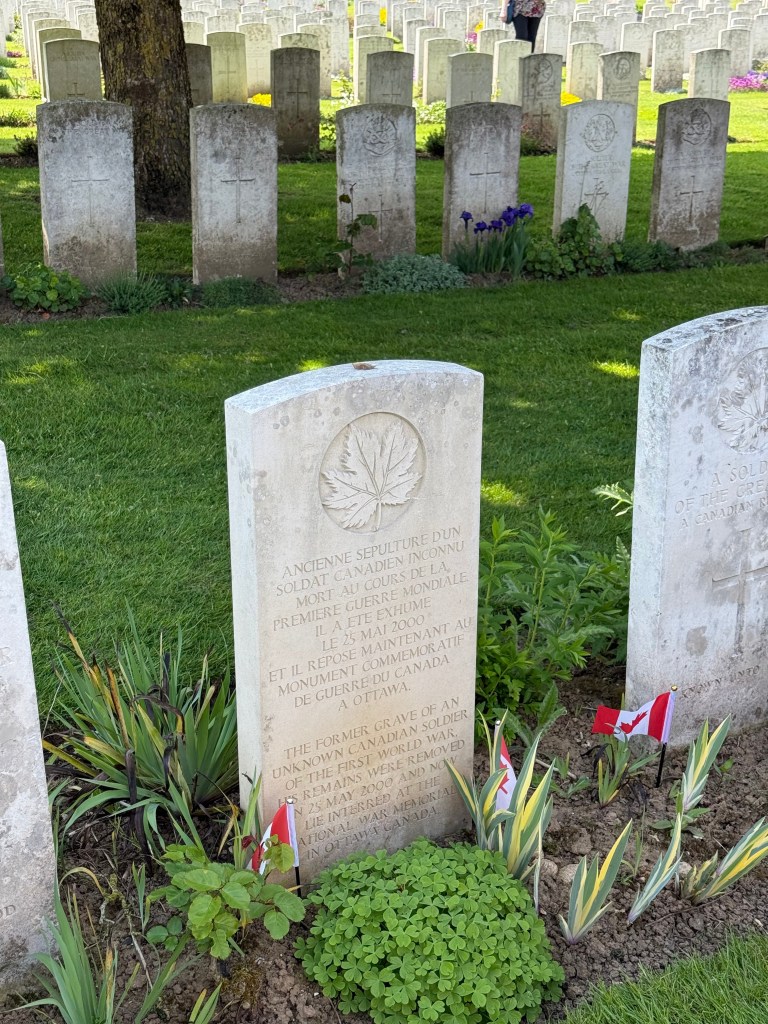
After a wonderful lunch at a restaurant in Thélus we travelled a short distance to La Cabaret-Rouge CWGC where we given an excellent overview of the Commonwealth War Graves Commission by John Cannon. The cemetery, named after a small café that once stood near the site at the beginning of the war, is home to more than 7,650 Commonwealth war dead, including many whose remains have yet to be identified. It was from this cemetery that an unknown soldier was exhumed in 2000, flown home to Canada, and buried in a tomb at the foot of the Canadian War Memorial in Ottawa.
Ten minutes away was Villers Station CWGC where relatives of two of Coach Rembrandt’s participants were buried. Visiting the grave of a relation who died during either World War is a memorable experience. Even if you are too young to have known the soldier yourself the chances are you remember someone who was deeply affected by their loss.
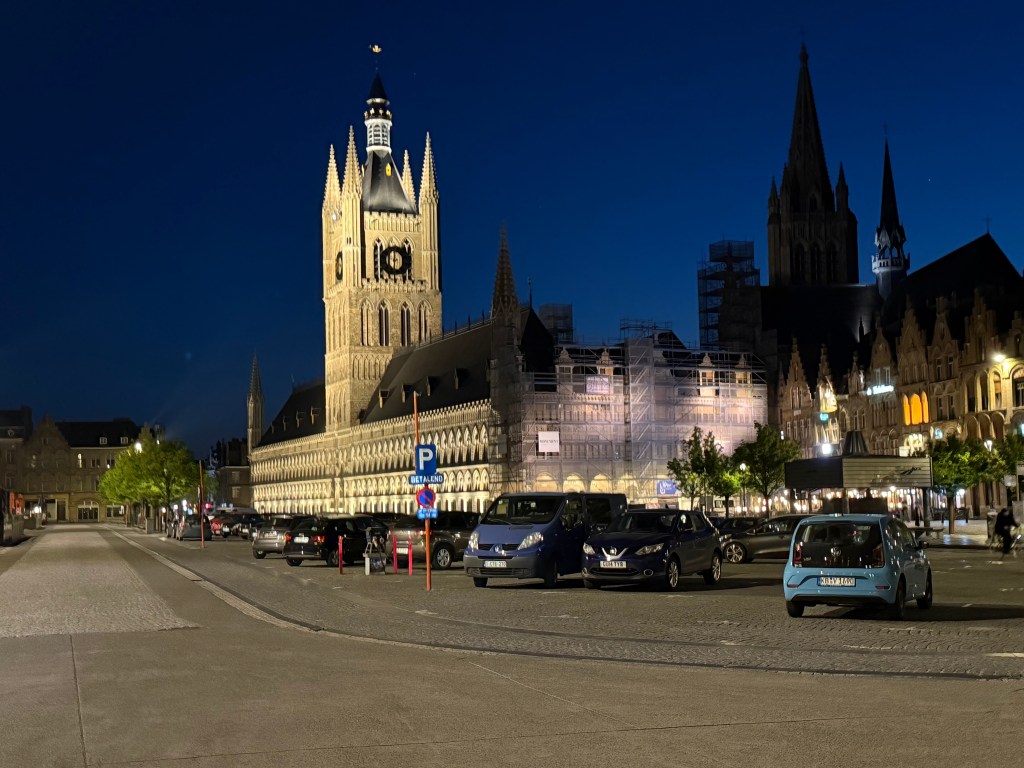
Our destination for the evening was Ypres, just an hour away. We were checked into our hotel in plenty of time to take part in the 8pm ceremony at the Menin Gate.
Day Z-1 – The Ypres Salient
While everyone travelling aboard coach Rembrandt would enjoy a second night in Ypres, Mat and I were heading to Amsterdam this afternoon. Nevertheless the density of First World War memorials and cemeteries in the Ypres Salient is such that we were able to visit a handful of sites in under six hours.
I spent nearly a week in the Ypres in 2016, and have already written about the sites I visited today, however visiting them with our group added much to the experience.
Our first stop was Hill 62 (Sanctuary Wood) Canadian Memorial where I delivered a brief on the events leading up to and including the Battle of Mont Sorrel, which was fought between June 2 and 13, 1916. I was last here in 2016, on the 100th Anniversary of the battle.
Fighting began in the Ypres Salient in October 1914 and continued throughout the war. It is therefore no surprise that our next stop, Tyne Cot Cemetery, is the largest Commonwealth war cemetery in the world. It is the final resting place of 11,961 Commonwealth soldiers who are either buried or commemorated here. The Tyne Cot Memorial, situated on the edge of the cemetery, commemorates an additional 35,000 British and New Zealand soldiers who went missing after August 16, 1917 and for whom there are no known grave.
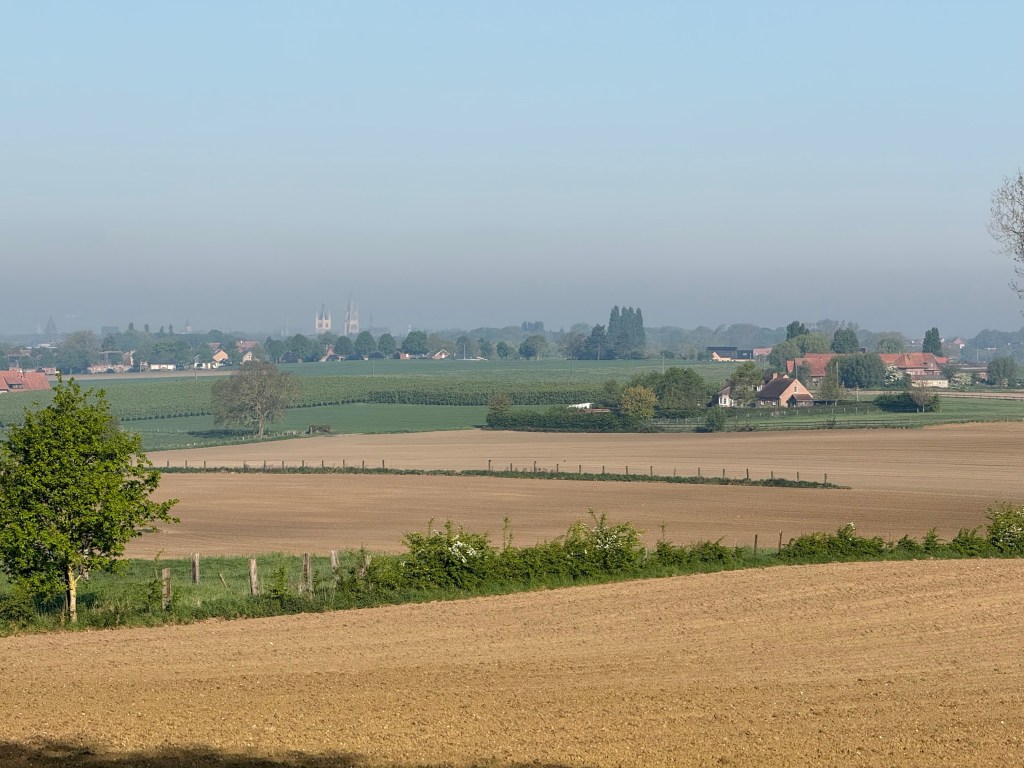
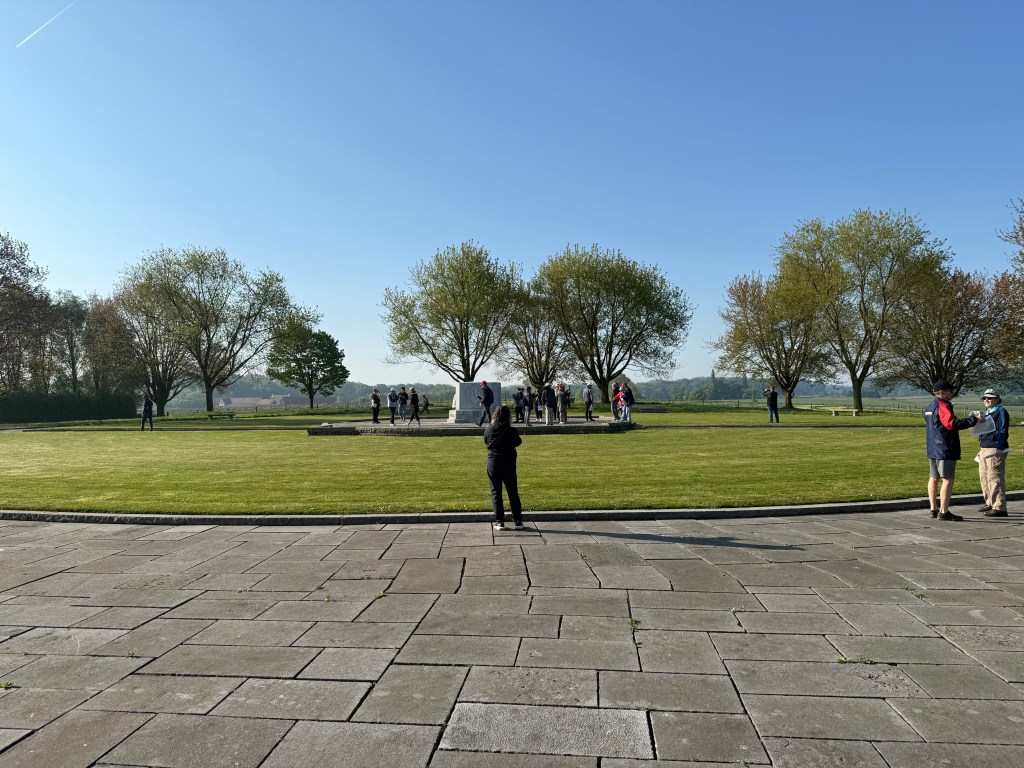
A short distance away, is the Passchendaele Canadian Memorial, also known as Crest Farm Memorial as it sits on the site of what was Crest Farm. Overlooking the rebuilt town of Passchendaele and set amid beautiful rolling farmland it is difficult to imagine the horrors that took place here, until Phil’s powerful reading of an account by a 19-year old British officer did just that. The young soldier’s initial enthusiasm was brought to an abrupt end after a month spent witnessing the slaughter that took place in the mud of Passchendaele.
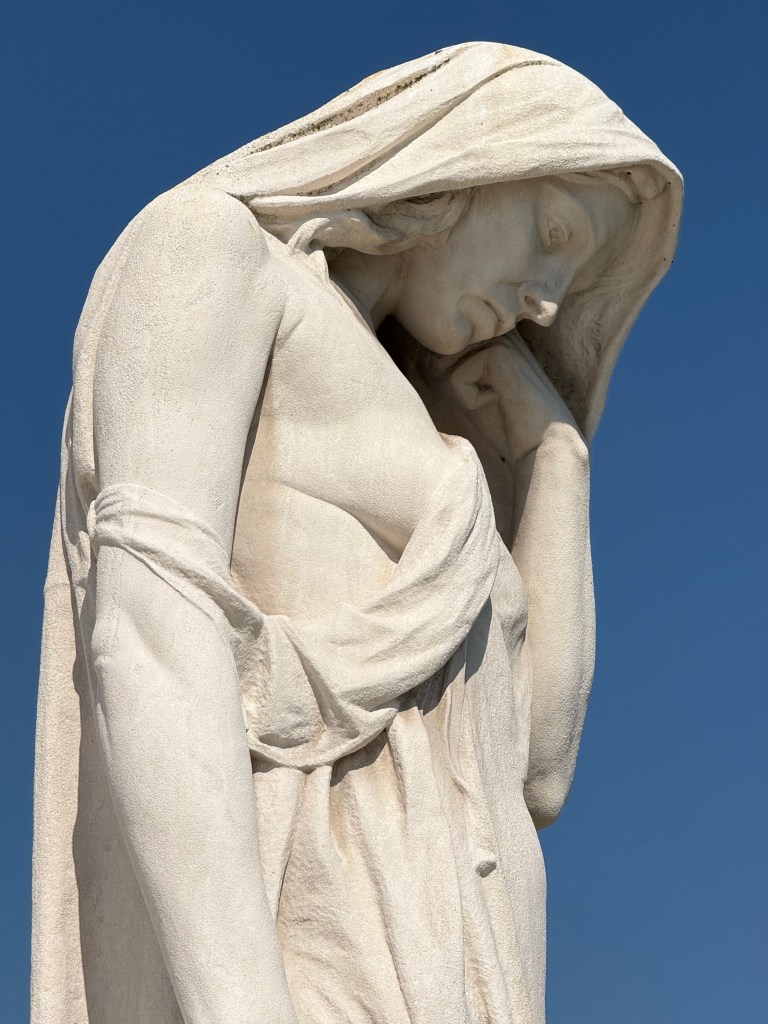
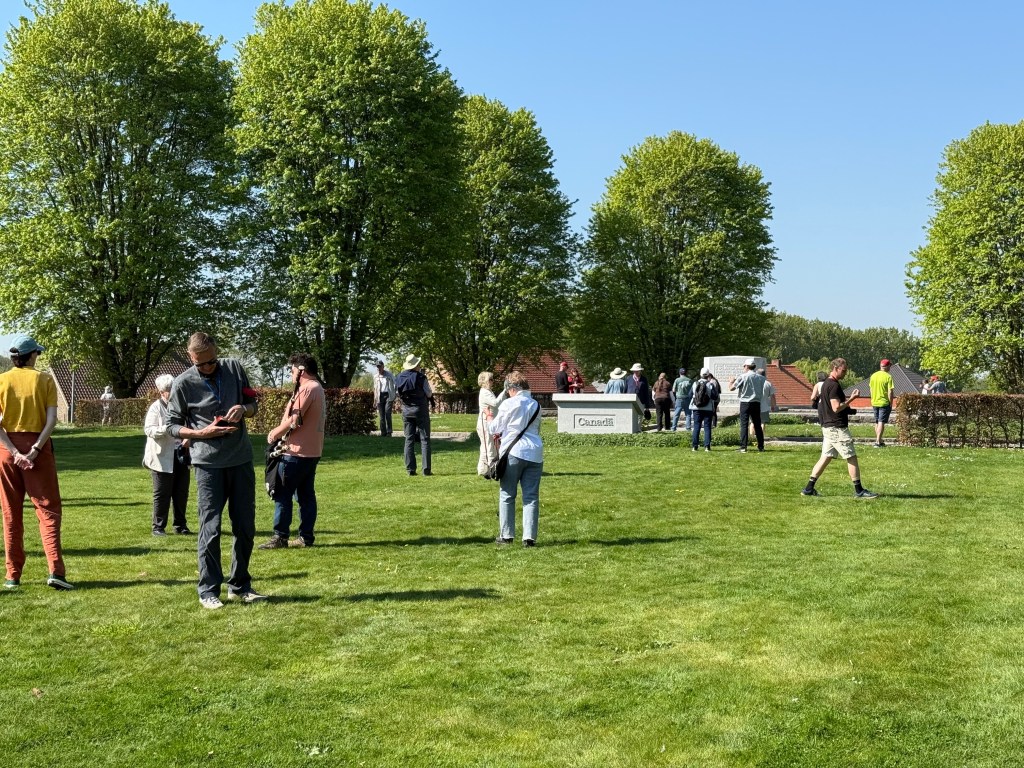
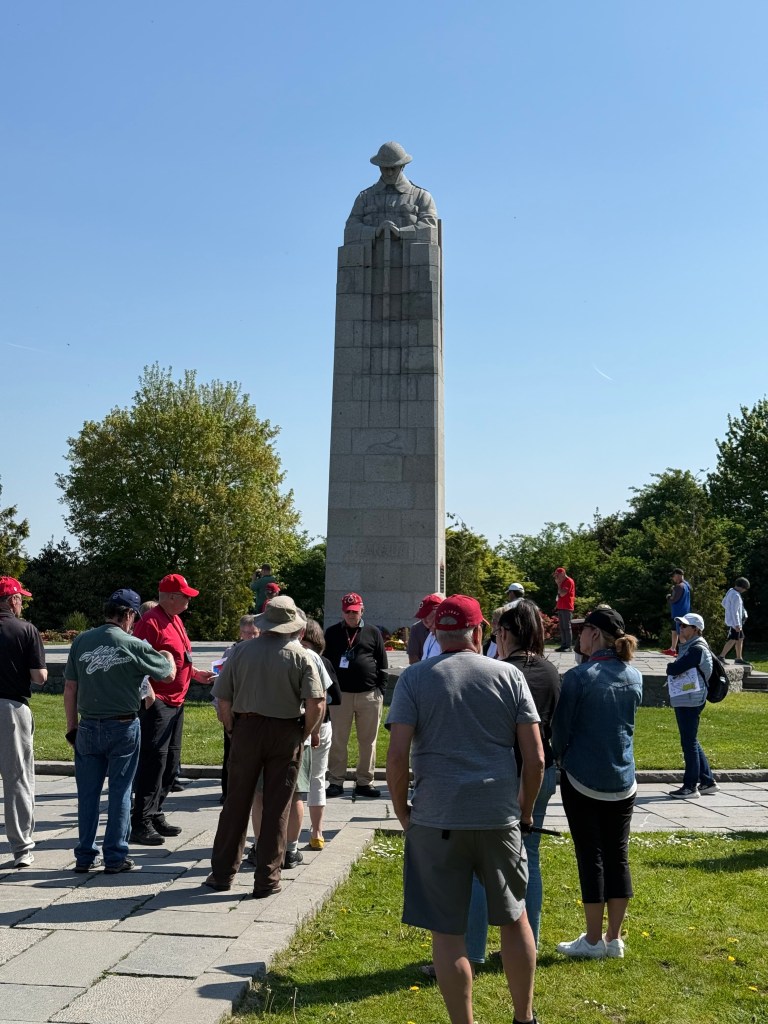
Our next stop was the St. Julien Canadian Memorial, better known as the “Brooding Soldier”. The magnificent memorial was designed by Canadian Frederick Chapman Clemesha, an architect and former soldier. While the Vimy Memorial is breathtaking, the Brooding Soldier remains my favourite. It commemorates the First Canadian Division’s heroic stand during the Second Battle of Ypres.
Our final stop was Essex Farm Cemetery, named after Britain’s Essex Regiment, and situated next to an advanced dressing station used by the Canadian Artillery during the Second Battle of Ypres. Stationed here in 1915 was Canadian physician Lt-Col. John McCrae, who penned In Flanders Fields shortly after burying his friend Alexis Helmer in early May of that year.
After a busy morning everyone was free to explore Ypres on their own, however Mat and I had a 3.5-hour train ride to Schiphol Airport. There we would begin the next leg of our journey, which is covered in Part 1 and Part 2 of this series.
Thank you to Phil and John for allowing Mat and I to tag along for three days, and to the entire Liberation Tours team for a wonderful two weeks in France, Belgium and the Netherlands!


Categories: CWGC, Photographs, Remembrance, Royal Newfoundland Regiment, Travel, Vimy
 Doing Our Bit
Not in the exact same order but very similar to the First World War tour we did with the U of S with Bill Waiser as our local Saskatoon “colour commentary”. We also did
Valenciennes as Hugh Cairns died near there. Thanks so much for the video. It brings back all the feelings of standing there under a blue sky looking at the rows upon rows of headstones.
You’re very welcome Bernie and thanks for your feedback. It was very peaceful on that day and I love that all you could hear were the birds and the wind in the trees.